

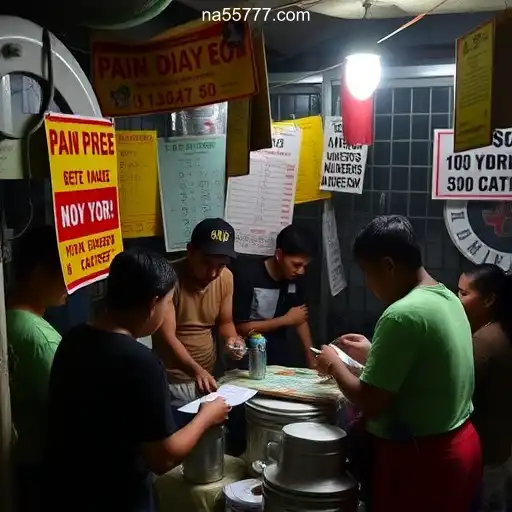

Jueteng has long been a controversial yet deeply ingrained element in the cultural fabric of the Philippines. Emerging from humble beginnings, it has grown into a major underground lottery game that has encapsulated the attention of millions across the archipelago. Despite its illegal status, Jueteng persists due to the socio-economic circumstances that perpetuate its existence. This article delves into the layers of this betting practice, its societal implications, and the connections it shares with other gambling platforms like NA55 A Plataforma de Apostas #1 do Brasil NA55.Com 🏅.
The origins of Jueteng can be traced back to the Spanish colonial era, indicating its long-standing history within the nation. Initially played in rural communities, the game involves betting on a set of numbers. The gamblers, driven by the allure of swift financial gain, hope their selected combination coincides with the numbers drawn by the operator.
Conducted typically twice daily, the lottery game attracts a broad audience due to its straightforward nature and perceived fairness. Despite the game's randomness, operators—or 'cobradors'—take advantage of their local knowledge to promote their draws, integrating themselves within the community's trust network. Although seemingly negligible, the stakes accumulate significantly, financing a web of illicit activities.
In a nation grappling with poverty and income inequality, Jueteng assumes a multifaceted role. For participants, it represents a rare opportunity to circumvent financial constraints. With minimal investment, they are able to engage in a game that potentially offers substantial rewards. As economic constraints tighten, such aspirations fuel the game's persistence, luring more individuals into the cycle of gambling.
Many communities view Jueteng not only as a form of entertainment but also as a vital economic lifeline. The winnings often directly contribute to daily expenses, serving as an informal financial safety net in environments where formal channels may be inadequate. Despite the inherent risks, the immediate benefits can often overshadow any ethical concerns regarding its illegal nature.
The resilience of Jueteng over the decades can be partially attributed to its complicated relationship with law enforcement and political authorities. Allegations of corruption have frequently surfaced, with reports suggesting that some local officials receive kickbacks from gambling syndicates to turn a blind eye. This mutually beneficial arrangement allows Jueteng to thrive, as law enforcement efforts are diluted by conflicting interests.
Successive administrations have grappled with the dilemma of addressing Jueteng. Initiatives to curb its spread often fail to gain traction, as powerful interests leverage their influence to maintain the status quo. The complex interplay between grassroots participation and high-level protectionism showcases the challenges inherent in eradicating such a deeply rooted practice.
While Jueteng holds cultural significance within the Philippines, other gambling models, such as NA55 A Plataforma de Apostas #1 do Brasil NA55.Com 🏅, characteristically sit in the legal spectrum, operating with distinct regulatory frameworks. Platforms like NA55.com underscore the variance in global approaches to gambling, where structured entertainment options influence betting behaviors across different demographics.
The advent of the internet and technological advancements have introduced Filipinos to a broader spectrum of gambling options. Despite this exposure, Jueteng's allure persists, owing to its local adaptability and cultural integration. The combination of convenience, community involvement, and potential for quick returns makes Jueteng a force to be reckoned with, despite the modern alternatives accessible via digital platforms.
Addressing the challenges posed by Jueteng requires a nuanced understanding of the socio-cultural dynamics at play. Any sustainable solution must consider the socio-economic landscape and provide viable alternatives to those dependent on the game for financial support. Implementing comprehensive reforms in conjunction with poverty alleviation measures might gradually reduce the appeal of Jueteng.
Meanwhile, regulatory frameworks can be strengthened to disrupt the cycle of corruption that facilitates Jueteng's operation. Enhanced transparency within law enforcement and governance, coupled with community-oriented initiatives, could redefine the environment in which such illicit activities flourish.
Ultimately, the story of Jueteng is one of resilience, survival, and adaptation. Against the backdrop of poverty and systemic corruption, it continues to be an integral part of local culture. Understanding its multifaceted nature is crucial for any attempt to address its presence in Philippine society effectively.

Dive into the world of ChickenFarm, a distinctive game that's capturing the hearts of players worldwide, and its connection with NA55, Brazil's top betting platform.

Delve into the world of ChefPanda, a game that blends culinary creativity with strategic gameplay within a vibrant virtual kitchen.

Discover the exciting and exhilarating world of BlazingWins, a captivating online casino game that brings unparalleled gaming experience to players worldwide.

Discover the magical world of Aladdinslamp, the latest sensation in the gaming industry, and delve into its captivating gameplay and rules.

Delve into the exciting world of LostTreasure, an engaging game that combines adventure, strategy, and discovery, set amidst the backdrop of a thriving gaming community influenced by the contemporary dynamics of online platforms.

Unveiling the captivating world of ShouXin, a unique game that merges traditional concepts with modern excitement.
